
How the Right Colors Can Transform Your Skin's Appearance
- Kristine Ohkubo

- Apr 22
- 3 min read
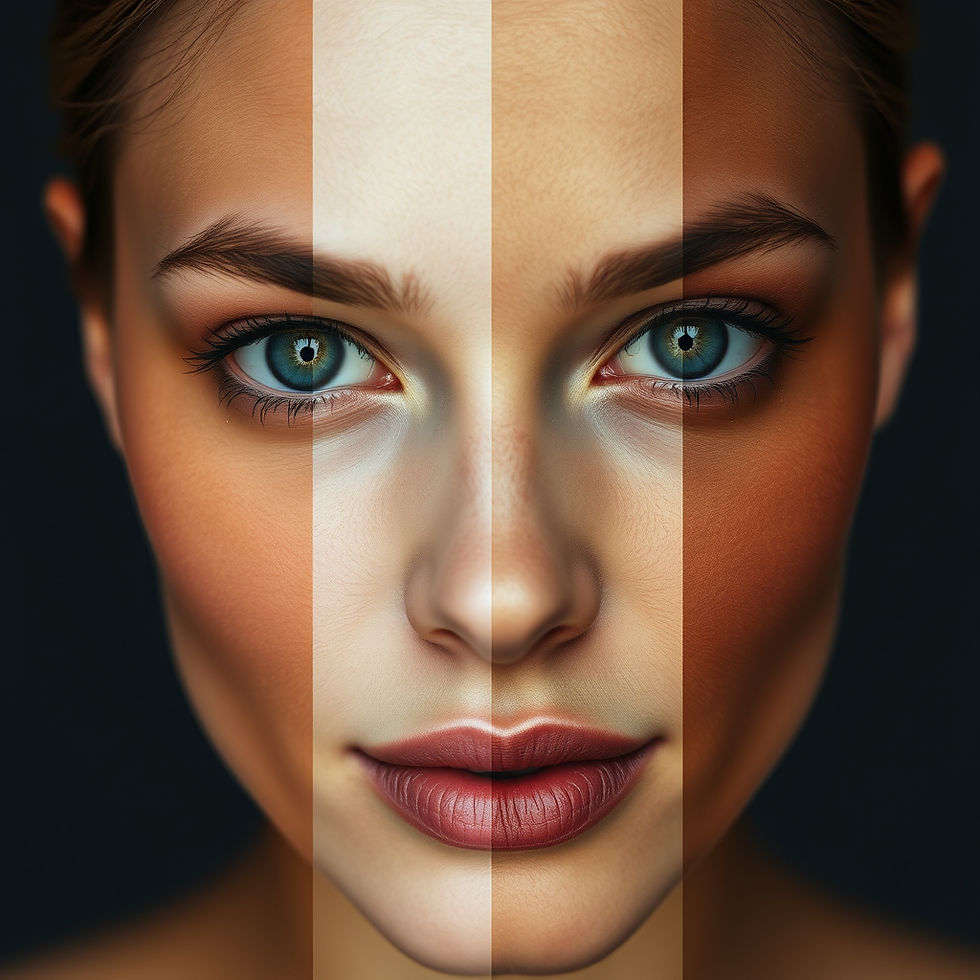
Having radiant skin is not solely about adhering to a meticulous skincare routine or discovering the perfect products tailored to your individual needs. In fact, the colors you wear play a significant role in enhancing your skin's natural beauty. The right colors can illuminate your complexion, creating a vibrant, healthy glow that brings life to your face, while the wrong choices can leave you looking dull or washed out. The process of identifying your most flattering colors can feel somewhat enigmatic, especially with the vast array of shades available in the Pantone spectrum. However, this article aims to demystify the journey of color selection, providing you with the insights needed to make informed choices that will enhance your overall appearance.
Skin tones can vary widely, ranging from the fairest porcelain to the deepest ebony, but within these tones lies the crucial aspect of undertones. Undertones are the subtle hues that exist beneath the surface of your skin tone, categorized mainly into three groups: cool, warm, and neutral. It's important to understand that while your skin's tone may shift with the seasons—becoming more tanned during summer months or lighter in winter—the underlying undertone remains constant throughout your life. This stability is key when it comes to selecting colors that will consistently complement your complexion.
Identifying your skin's undertone can be accomplished through several straightforward methods. One popular technique involves examining the veins on the inside of your wrist. If the veins appear to be predominantly blue or purple, this typically indicates a cool undertone. Conversely, if they appear more green, it suggests a warm undertone. This simple observation can provide a quick and effective way to determine the base tone of your skin.

Another effective method is known as the white T-shirt test. To perform this test, you will need a true white shirt and a source of natural light. Hold the shirt up next to your face and observe how your complexion interacts with the optic white fabric. If your skin appears pink or rosy in contrast to the bright white, you are likely to have cool undertones. On the other hand, if your skin looks more yellow next to the white swatch, it indicates that your undertone is warm. This test is a practical way to see how different colors can affect your overall appearance.
Additionally, you can try the jewelry test to further confirm your undertone. This involves wearing pieces of jewelry in both gold and silver. If gold jewelry enhances your skin's brightness and warmth, it is a strong indication that you possess warm undertones. Conversely, if silver jewelry complements your skin more effectively, then you are likely to have cool undertones. This method not only helps to identify your undertone but also assists in choosing accessories that will enhance your overall look.
Once you have successfully determined your undertone, selecting flattering shades becomes a much simpler task. Generally speaking, individuals with warm undertones tend to look best in earthy colors such as red, coral, yellow, orange, cream, and olive green. These warm hues can enhance the natural glow of your skin and bring out its best features. In contrast, those with cool undertones often shine in jewel tones like emerald, sapphire, amethyst, deep purples, icy blues, and charcoal. These rich, vibrant colors can create a striking contrast that highlights the coolness of your complexion. For those with neutral undertones, muted shades like jade, blush pink, coral, navy, and off-white are typically most flattering, as they maintain a harmonious balance without overwhelming the skin's natural tones.

It is equally important to be aware of colors that may not work in your favor based on your undertone. For individuals with warm undertones, colors such as icy blues and stark whites can be particularly unflattering, as they may wash out your complexion and diminish its vibrancy. On the other hand, if you possess cool undertones, it is advisable to steer clear of orange and tomato red, as these shades can clash with your cool base and detract from your overall appearance. Those with neutral undertones should also exercise caution, avoiding overly bright neons that can disrupt the delicate balance of their skin tone. By understanding and applying this knowledge, you can confidently curate a wardrobe that not only reflects your personal style but also enhances your natural beauty.
Comments